Legacy software modernization
Legacy software modernization without a big-bang rewrite
We replace ageing systems, spreadsheet engines and unmaintained code piece by piece, so the business keeps running while the platform underneath it changes.
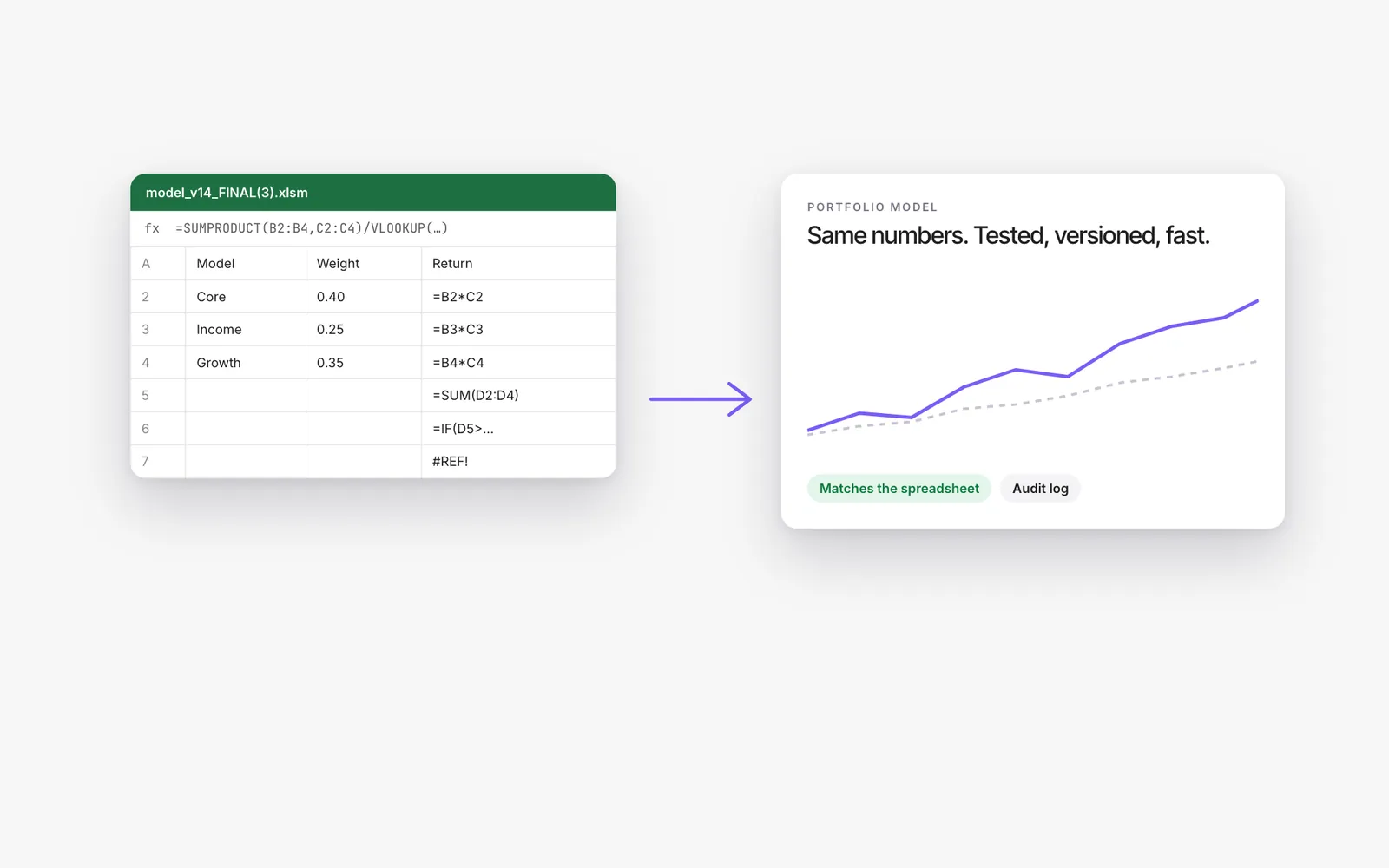
Big-bang rewrites fail. We replace old systems one piece at a time, proving each step against the original.
What is legacy software modernization?
Legacy software modernization is replacing or upgrading old systems so they are secure, maintainable and able to connect to modern tools, while the business keeps running on them.
Legacy software modernization is rarely about technology for its own sake. It starts when the old system blocks the business: it cannot integrate, only one person understands it, it fails audits, or it costs more to keep alive than to replace. UK teams often call this legacy system modernisation.
Big-bang rewrites fail because they try to replace everything at once. We work incrementally. We put a new interface or API in front of the old system, move one capability at a time, and check every step against the original before switching over.
An example: from Excel to a platform
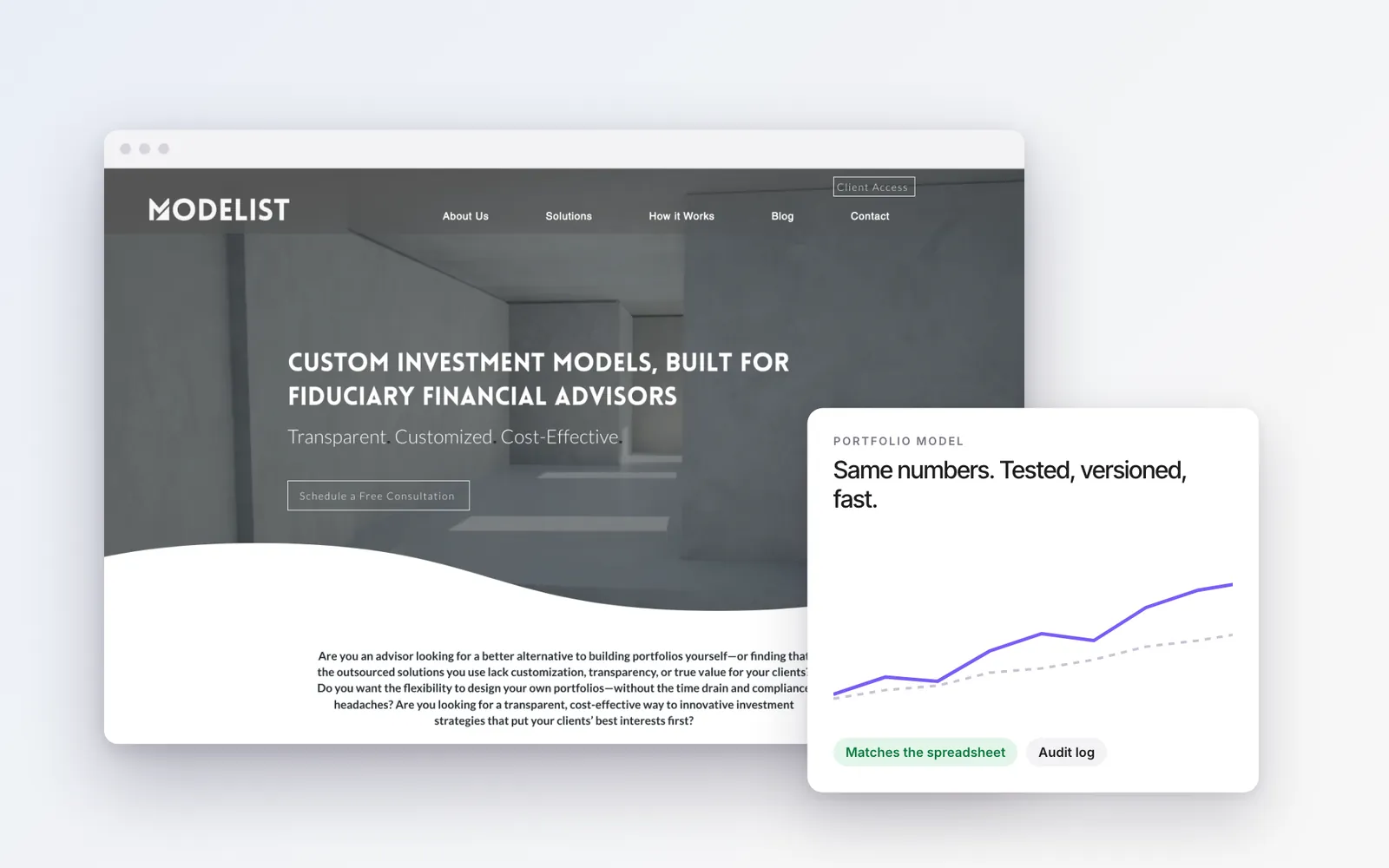
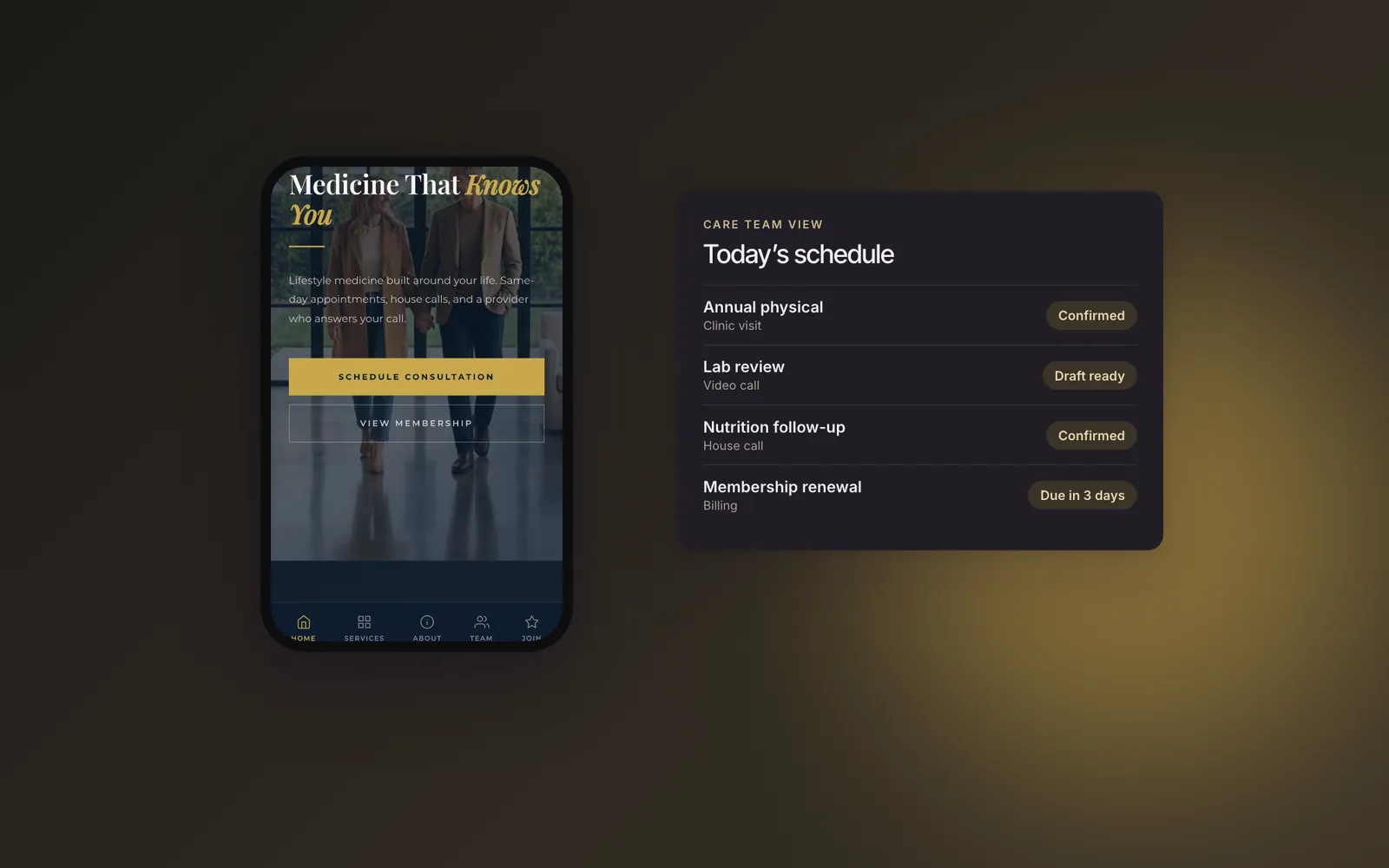
For Modelist, we replaced an Excel and VBA modelling workbook with a web platform for financial advisors. Before it replaced the spreadsheet, the new engine was checked against it model by model: total returns match to four decimal places across all 13 models. We are taking the same staged approach with LX Medical, moving a legacy NestJS system to a new platform one capability at a time.
Typical starting points
- Spreadsheets and VBA macros that run critical calculations.
- PHP, .NET Framework or Java systems with no tests and no original developers.
- Desktop or on-premise software that needs to move to the cloud.
- Several systems doing overlapping jobs that should be one platform.
Capabilities
What Legacy Software Modernization includes
System assessment
Code, data, integrations and risk mapped before anything changes.
Strangler-pattern migration
Replace one capability at a time behind a stable interface.
Data migration
Scripts that move, clean and reconcile data, rehearsed before cut-over.
Parity testing
Automated comparisons proving the new system gives the same answers as the old.
Cloud migration
From on-premise or ageing servers to AWS, Google Cloud or Cloudflare.
Documentation and handover
So the new system never depends on a single person again.
Process
How the engagement runs
1Assess
Inventory of features, data and integrations, and which of them still matter.
2Plan the slices
An order of migration that reduces risk first and delivers value early.
3Migrate and verify
Each slice built, tested against the legacy system and switched over.
4Retire
The old system is switched off once nothing depends on it.
Technology
Tools we run in production
Chosen per project for your team, your hosting and your budget, not for the sake of novelty.
- Node.js
- NestJS
- TypeScript
- PostgreSQL
- Prisma
- AWS
- Docker
- BigQuery
Pricing
How pricing works
Modernization starts with a fixed-price assessment that maps the system and produces a migration plan with an estimate for each slice. The migration itself is usually time and materials, or fixed price per slice once each one is well understood.
Related work
Financial services
Replacing a spreadsheet engine with a portfolio modelling platform
01 / 02
Your team
Who you will work with
Irtiza Batool
Lead Software Engineer, Backend
The parts you never see and always rely on.
Shakir Mattoo
Founder and Software Engineer
A founder who still reads the code.
Tooba Tak
Front-end Lead and Shopify Expert
Fast screens, and Shopify stores that sell.
FAQ
Legacy Software Modernization: common questions
1What is legacy software modernization?
Replacing or upgrading old software so it is secure, maintainable and able to integrate with modern tools, while keeping the business running throughout.
2Should we rewrite from scratch or modernize incrementally?
Incrementally, in almost every case. A full rewrite delays value and carries a high risk of missing behaviour the old system quietly handled. Incremental migration delivers improvements early and can be stopped or re-prioritized.
3How do you make sure nothing breaks?
We run the new and old systems side by side and compare their outputs automatically before switching each part over. Data migrations are rehearsed and reconciled before the real cut-over.
4Can you modernize spreadsheet-based processes?
Yes. Spreadsheet engines are a common starting point. We turn the logic into tested code with a proper interface, and prove it matches the spreadsheet first.
Send a message
Tell us about your project.
A short brief is enough. Someone who can answer technical questions replies within one business day. Prefer to talk? Call us.